Lesson 3
Excercise 1
A General Rule Of Thumb Fingers
It's important to use all of your fingers when playing the guitar. The following exercise will help you to develop this habit while improving your coordination and dexterity. The correct fingerings have been written below the tablature.
Repertiore
Apply what you have learnt in the previous exercise to the following compositions.
I Got Rhythm
Let's have a look at how to read rhythms. There are three different note types written below. They each have a different duration.
Whole Note
w = 4 Beats
Half Note
h = 2 Beats
Quarter Note
q = 1 Beat
Pulse/Beat
The pulse or beat are one and the same; a regular and consistent rhythm. In most contemporary music we divide these beats into groups of four.
Here they are written on the stave. Listen carefully to how they sound. Remember we are dealing exclusively with rhythm at the moment (not pitch).

When reading a rhythm, count the beats aloud or in your head. In the example below the count has been written above the stave so that you can clearly see which beat each note falls on. Try playing this rhythm on an open string.
Chords
Here are a two new chords. Once you feel confident that you can play them, practise switching between them.
C Chord
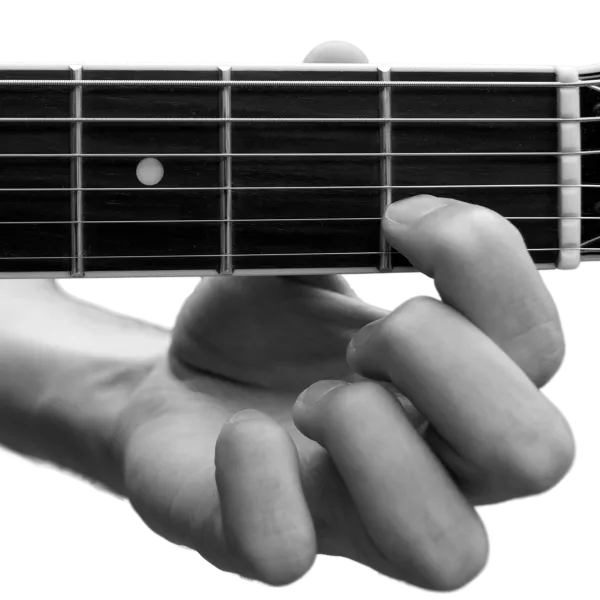
Am Chord
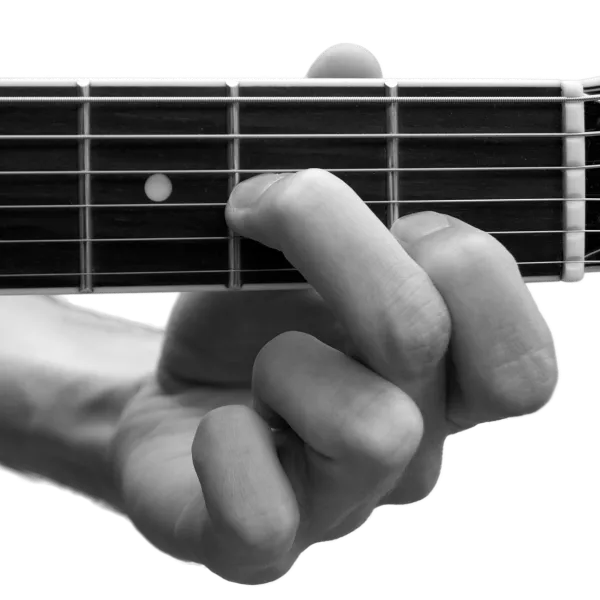
Now we will combine reading rhythm and chords together. Play through this rhythm on its own: you can do this on an open string or on a single chord. Once you're confident, change chord as they occur written above the rhythm. Play along with the backing track provided.